Heart disease is the leading cause of death in Malaysia — responsible for more fatalities each year than any other single condition. What makes it particularly dangerous is how quietly it develops. Many people experience their first cardiac event with no prior warning. Cardiac screening exists to find the warning signs that the body is not making obvious.
Key Takeaways
- Heart disease is Malaysia’s number one killer — and it is largely preventable through early detection and lifestyle management
- Cardiac screening includes a range of tests from a basic ECG and cholesterol check to echocardiograms and exercise stress tests, depending on your risk profile
- Symptoms like chest tightness, palpitations, unexplained breathlessness, and dizziness should always be medically evaluated — they are not always serious, but they should never be dismissed
- Key risk factors include hypertension, diabetes, high cholesterol, smoking, obesity, a sedentary lifestyle, and a family history of early heart disease
- Men over 40 and women post-menopause face elevated cardiovascular risk and should have at minimum an annual cardiovascular risk assessment
- Klinik Len Seng in Cheras offers cardiac risk assessment as part of our health screening packages
The heart is a muscle that operates continuously, day and night, for decades. Like any other system subjected to sustained demand, it accumulates wear — some of which is inevitable with age, and much of which is accelerated by lifestyle and metabolic risk factors. The good news is that the disease processes leading to heart attacks and strokes are slow-moving and detectable long before they become critical — if you know what to look for.
What Is Cardiac Screening?
Cardiac screening is a structured set of assessments designed to evaluate the health of your heart and cardiovascular system. It ranges from basic risk factor identification — blood pressure, cholesterol, blood sugar — to advanced imaging of the heart’s structure, function, and blood supply.
The goal is not to wait for a heart attack to confirm a problem. It is to detect the conditions that precede one — arterial plaque, elevated cardiac markers, rhythm abnormalities, impaired heart function — early enough to intervene effectively.
Symptoms That Should Not Be Ignored
Some symptoms warrant prompt medical evaluation rather than waiting for a scheduled screen. See a doctor as soon as possible — or go to an emergency facility immediately if severe — if you experience:
- Chest pain, pressure, tightness, or heaviness — particularly if it radiates to the left arm, jaw, or back
- Palpitations — a racing, pounding, or irregular heartbeat, especially if accompanied by dizziness or breathlessness
- Unexplained shortness of breath at rest or with minimal exertion
- Dizziness or fainting (syncope) without an obvious cause
- Persistent fatigue that is disproportionate to your activity level
- Ankle or leg swelling (oedema) — particularly if new and without an obvious cause
Not all of these symptoms indicate a cardiac problem — many have other explanations. But because some do indicate serious cardiac conditions including arrhythmias, heart failure, and impending acute coronary events, they must be medically assessed rather than managed with self-diagnosis.
What Tests Are Included in Cardiac Screening?
The scope of cardiac screening depends on your age, symptoms, and risk factors. A GP or cardiologist will determine which investigations are appropriate:
Electrocardiogram (ECG)
An ECG records the electrical activity of the heart through electrodes placed on the chest, arms, and legs. It is non-invasive, takes 10–15 minutes, and provides information about heart rate, rhythm, electrical conduction, and signs of previous or current cardiac stress. An ECG at rest can detect arrhythmias, bundle branch blocks, and changes consistent with previous heart attacks or ischaemia.
Cardiovascular Blood Markers
Several blood tests provide information about cardiac risk and heart muscle health:
- Lipid profile — total cholesterol, LDL, HDL, triglycerides; the cornerstone of cardiovascular risk assessment
- Fasting blood glucose and HbA1c — diabetes is one of the strongest cardiovascular risk factors
- High-sensitivity CRP (hsCRP) — a marker of arterial inflammation, associated with increased cardiovascular risk even in the absence of elevated cholesterol
- Troponin — a cardiac enzyme released when heart muscle is damaged; used in the investigation of chest pain to assess for acute myocardial infarction
- BNP / NT-proBNP — biomarkers elevated in heart failure; used in the evaluation of breathlessness and fluid retention
Echocardiogram (Heart Ultrasound)
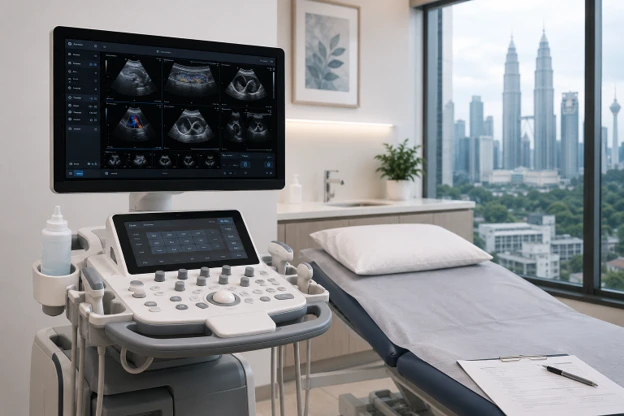
An echocardiogram uses ultrasound technology to produce real-time images of the heart’s structure and function — the four chambers, valves, wall thickness, and the pumping function (ejection fraction). It can detect structural abnormalities including valvular disease, cardiomyopathy (weakness of the heart muscle), pericardial effusion (fluid around the heart), and congenital defects.
Exercise Stress Test (Treadmill Test / ETT)
An exercise stress test assesses how the heart performs under physical demand. The patient walks or runs on a treadmill at progressively increasing intensity while the ECG is continuously recorded. The test identifies ischaemia — reduced blood supply to the heart muscle — that may not be apparent at rest. It is used to evaluate unexplained chest pain, assess surgical risk, and guide exercise recommendations in cardiac patients.
Carotid Ultrasound
Carotid ultrasound examines the arteries supplying the brain for atherosclerotic plaque and measures intima-media thickness — a marker of arterial wall health that correlates with overall cardiovascular risk. It is a useful tool for assessing stroke risk and the extent of systemic arterial disease.
Coronary Calcium Score (CT Calcium Score)
A non-invasive CT scan that quantifies calcium deposits in the coronary arteries. Calcium in the arteries is a direct marker of atherosclerosis. A high calcium score indicates a significantly elevated risk of future cardiac events and can guide decisions about preventive treatment — including statin therapy — even in patients with otherwise “normal” cholesterol.
Who Should Get Cardiac Screening?
Cardiac screening should be considered by anyone with established cardiovascular risk factors, but it becomes especially important for:
- Men aged 40 and above
- Women aged 45 and above, or younger women post-menopause (loss of oestrogen accelerates cardiovascular risk in women)
- Individuals with hypertension (even if well-controlled)
- Those with Type 2 diabetes or pre-diabetes
- Anyone with elevated cholesterol — particularly high LDL or low HDL
- Smokers or former smokers
- Those with a family history of heart attack or stroke before age 60 in a first-degree relative
- Individuals who are obese or have significant central adiposity (large waist circumference)
- People with a sedentary lifestyle and poor dietary habits
Cardiovascular Risk Factors at a Glance
|
Risk Factor |
Cardiovascular Effect |
Action |
|---|---|---|
|
Hypertension |
Damages arterial walls; increases cardiac workload |
Blood pressure monitoring; medication if needed |
|
High LDL Cholesterol |
Plaque build-up in coronary arteries |
Lipid-lowering therapy; dietary changes |
|
Diabetes / Pre-diabetes |
Accelerates atherosclerosis; damages nerves and vessels |
Blood sugar management; HbA1c monitoring |
|
Smoking |
Damages endothelium; promotes clotting; reduces HDL |
Cessation — the most impactful single intervention |
|
Obesity / Central adiposity |
Increases BP, LDL, insulin resistance |
Weight management; dietary and exercise intervention |
|
Family history (early CVD) |
Genetic predisposition; earlier onset |
Earlier and more frequent screening; preventive medication |
|
Sedentary lifestyle |
Worsens all metabolic risk factors |
150 min/week moderate aerobic activity minimum |
Cardiac Screening After a Symptom Episode
If you have experienced a chest pain episode, palpitations, dizziness, or unexplained breathlessness — even if it resolved on its own — it should be evaluated by a doctor. Transient symptoms can represent warning signs of serious conditions including unstable angina, arrhythmias, or impending acute myocardial infarction.
At Klinik Len Seng, our outpatient and emergency services provide prompt assessment for cardiac symptoms, including an ECG, clinical examination, and referral to a cardiologist where indicated. Do not dismiss a symptom because it was brief or because you feel well now.
Cardiac Screening at Klinik Len Seng, Cheras
Klinik Len Seng provides cardiovascular risk assessment and cardiac screening as part of our health screening packages. A comprehensive cardiac screen at our clinic includes blood pressure, lipid profile, fasting blood glucose, and ECG — with referral pathways to specialist cardiologists for patients who require echocardiography, stress testing, or advanced imaging.
For men specifically, a cardiac risk assessment is a central component of our men’s health services. For women concerned about post-menopausal cardiovascular changes, our women’s health team can assess cardiac risk in the context of hormonal changes.
Frequently Asked Questions About Cardiac Screening in Malaysia
Is an ECG enough to rule out heart disease?
A resting ECG provides valuable information but has limitations. It may appear normal even in patients with significant coronary artery disease if the blockage is not causing acute electrical changes at rest. For a more complete assessment, an ECG should be accompanied by blood tests and, depending on your risk profile, an exercise stress test or imaging.
How is cardiac screening different from seeing a cardiologist?
Cardiac screening at a GP level identifies risk factors and flags abnormalities that warrant specialist evaluation. A cardiologist performs more detailed assessments — including advanced imaging and invasive investigations like coronary angiography — for patients with confirmed or suspected cardiac disease. The GP is often the appropriate first step; the cardiologist steps in when a problem has been identified that requires specialist management.
Does cardiac screening hurt?
An ECG is entirely painless — electrodes are placed on the skin with no needles involved. Blood tests involve a brief needle prick. An exercise stress test may be demanding physically, but is conducted under medical supervision. Echocardiography is non-invasive and painless.
My cholesterol is normal. Do I still need cardiac screening?
Yes. Cholesterol is one of several cardiovascular risk factors. A person with normal cholesterol but hypertension, diabetes, a strong family history, or a sedentary lifestyle may still carry significant cardiac risk. A comprehensive assessment accounts for all relevant factors — not just one marker in isolation.
At what age should cardiac screening begin?
Blood pressure and basic cardiovascular markers (cholesterol, blood sugar) should be checked from the late 20s or early 30s to establish a baseline. More structured cardiac screening — including ECG and comprehensive risk profiling — is recommended from age 40 for men and 45 for women, or earlier for those with established risk factors.
Finding a Family Care Clinic in Malaysia
Your heart has been working for you since before you were born. Give it the attention it deserves. Contact Klinik Len Seng today or WhatsApp us at +6012-565 1280 to arrange a cardiac risk assessment at our Cheras clinic.
Klinik Len Seng — Your trusted family health clinic in Cheras, Kuala Lumpur, committed to helping every patient understand and protect their heart health.