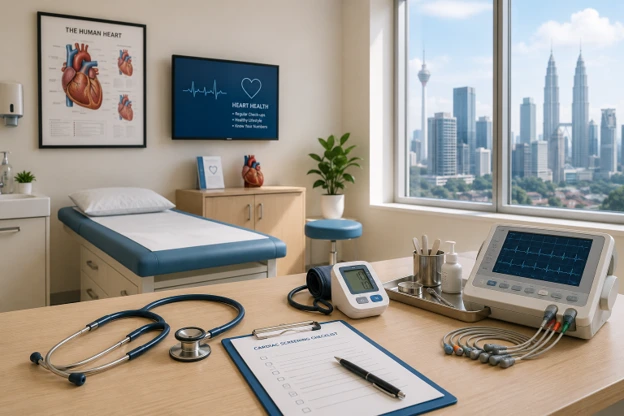
Most Malaysians visit a doctor when something goes wrong. A full medical check up takes the opposite approach — screening for problems before they have a chance to develop, and giving you a clear, evidence-based picture of your health right now.
With packages ranging from essential blood panels to comprehensive executive screenings, the challenge is knowing which one is right for you.
Key Takeaways
- A full medical check up in Malaysia typically includes a physical examination, blood tests, urine analysis, and a chest X-ray — with higher-tier packages adding cancer markers, cardiac assessments, and imaging
- Packages range from around RM75 for a basic panel to RM1,200+ for executive executive screenings with cardiac and imaging components
- Fasting for 8–10 hours is required before cholesterol, blood sugar, and liver function tests — always confirm with your clinic before your appointment
- Most check up packages are valid for 6 months from the date of purchase
- Annual health screening is recommended from age 30 onwards; more frequent screening is advised for those with risk factors like diabetes, hypertension, or a family history of heart disease or cancer
- Klinik Len Seng in Cheras, KL offers tailored health screening packages to suit different ages and health profiles
Preventive health care is an investment that pays dividends in the form of early detection, lower treatment costs, and better long-term outcomes. A full health check is not about anxiety — it is about certainty, and about equipping yourself with the information needed to make good decisions about your health.
What Is a Full Medical Check Up?
A full medical check up — also called a full health screening or comprehensive health assessment — is a structured set of tests and examinations designed to assess your overall health status, screen for common conditions, and establish a baseline against which future changes can be measured.
Unlike a GP visit for a specific complaint, a full medical check up is proactive. It examines systems across your body that may be showing early signs of disease without causing noticeable symptoms — including your cardiovascular system, liver, kidneys, blood sugar regulation, and, in higher-tier packages, cancer risk markers.
What Is Typically Included in a Full Medical Check Up?
The components of a medical check up vary by package tier, but most follow a structured progression from essential to comprehensive:
Physical Examination
A doctor assesses your blood pressure, heart rate, body weight, height, BMI, and abdominal circumference. A general clinical examination may include assessment of the eyes, ears, thyroid, lymph nodes, and respiratory and abdominal systems depending on the scope of the check up.
Blood Tests
Blood work is the core of most health screening packages. Components typically include:
- Full Blood Count (FBC) — red and white blood cells, haemoglobin, platelets; screens for anaemia, infection, and blood disorders
- Fasting Blood Glucose (FBS) — screens for diabetes and pre-diabetes
- Lipid Profile — total cholesterol, LDL, HDL, triglycerides; cardiovascular risk marker
- Liver Function Tests (LFT) — proteins, bilirubin, enzymes; assesses liver health
- Renal Function Tests (RFT) — urea, creatinine, eGFR, electrolytes; assesses kidney function
- Thyroid Stimulating Hormone (TSH) — added in intermediate and above packages; detects thyroid disorders
- Infectious disease markers — HIV, Hepatitis B surface antigen, VDRL (syphilis); standard in intermediate packages
Read more about blood test guide here.
Urine Analysis (FEME)
A urine full examination and microscopy examines protein, glucose, ketones, cells, and sediment — providing complementary information on kidney function, diabetes markers, and urinary tract health.
Chest X-Ray
Screens for pulmonary tuberculosis, lung abnormalities, and provides a baseline assessment of heart size and lung fields.
How Full Medical Check Up Packages Differ by Tier
Package Level | Approx. Price Range | What’s Included |
|---|---|---|
Basic | RM75–RM120 | Physical exam, FBC, FBS, cholesterol, urine analysis, chest X-ray |
Intermediate | RM120–RM200 | All above + LFT, RFT, TSH, blood group, HIV, Hepatitis B, syphilis |
Advanced | RM200–RM450 | All above + gender-specific cancer markers (PSA for men; CA-125, CA 15-3 for women; CEA, AFP, CA 19-9 for both) |
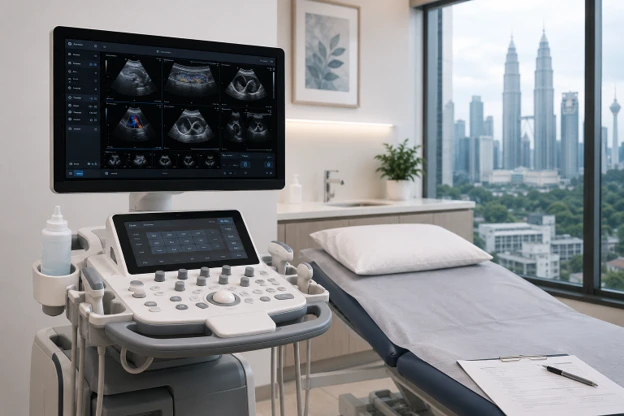
Executive / Cardiac | RM800–RM1,300+ | All above + ECG, echocardiogram, carotid ultrasound, stress test, lung function, abdominal ultrasound |
Cancer Marker Tests: What They Mean
Advanced and executive health screening packages often include tumour markers — blood proteins that may be elevated in the presence of certain cancers. Common markers include:
- PSA (Prostate-Specific Antigen) — elevated levels may indicate prostate enlargement or cancer; recommended for men from age 50 (or 45 with family history)
- CA 125 — ovarian cancer marker; screened in women’s packages
- CA 15-3 — breast cancer marker
- CEA (Carcinoembryonic Antigen) — colorectal and lung cancer marker
- AFP (Alpha-Fetoprotein) — liver cancer marker; particularly relevant in Malaysia due to the high prevalence of hepatitis B
- CA 19-9 — pancreatic cancer marker
Importantly, a raised tumour marker does not confirm cancer — it indicates a need for further investigation. Conversely, a normal result does not completely rule out malignancy. These markers are most useful as part of a broader clinical picture and should be discussed with your doctor.
Who Should Get Which Package?
The right package depends on your age, risk factors, and health history. As a general guide:
- 20s–30s with no known risk factors — a basic or intermediate package covering blood count, lipid profile, blood sugar, liver and kidney function, and infectious diseases is appropriate as a baseline
- 40s and above, or with risk factors (family history of heart disease/cancer, smokers, diabetics) — an advanced package including cancer markers and, where possible, an ECG
- 50s and above, or with cardiac symptoms — an executive package including cardiac assessments and imaging components
- Women of reproductive age — consider a women’s health add-on covering hormonal health and gynaecological markers
- Men from age 45+ — ensure the package includes PSA; complement with a men’s health consultation
How Often Should You Have a Full Medical Check Up?
There is no universal answer — frequency depends on your age and risk profile. General guidelines widely followed in Malaysia:
- Under 30, low risk — every 3–5 years, or when joining a new employer
- 30–40 — every 2–3 years
- 40–50 — annually, or as advised by your doctor based on results
- 50 and above — annually, with more frequent monitoring of any flagged results
- Known chronic conditions — as frequently as your doctor recommends; often every 3–6 months for specific markers
How to Prepare for Your Medical Check Up
- Fast for 8–10 hours before the appointment if blood sugar, cholesterol, or liver tests are included — water and essential medications are generally permitted, but confirm with your clinic
- Avoid strenuous exercise in the 24 hours before the appointment, as it can affect some blood markers
- Bring your MyKad or passport, a list of current medications, and any previous health screening reports for comparison
- Book a morning appointment if fasting is required — this minimises the time you need to go without food
- Wear comfortable, easy-to-remove clothing for the physical examination
Understanding Your Results
Results from a full health screening are reviewed with you by the doctor after the consultation. Most clinics provide a printed or digital report that clearly marks results as within or outside the normal reference range. Key things to understand:
- A single out-of-range result does not automatically mean a diagnosis — context matters, and your doctor will advise on whether repeat testing or specialist referral is needed
- Results should be compared against previous check ups over time; trends are often more informative than single values
- Your doctor will advise on lifestyle changes, medication, or further investigation based on the full picture of your results
Full Health Screening at Klinik Len Seng, Cheras
At Klinik Len Seng, our health screening packages are designed to be accessible, thorough, and clearly explained. Whether you are attending your first health check or adding to a series of annual reviews, our team will walk you through your results and advise on next steps — not just hand you a printout.
We offer separate consultations for men’s health and women’s health concerns that may arise from your screening results. For patients who need prompt investigation of urgent symptoms discovered during a check up, our outpatient services are available for timely follow-up.
Frequently Asked Questions About Full Medical Check Ups in Malaysia
Can I choose individual tests rather than a package?
Yes — many clinics, including Klinik Len Seng, can accommodate specific test requests outside of a standard package. If you already have recent results for certain components, you may not need to repeat them. Discuss with your doctor what is most useful given your health history.
Is a full health check the same as a pre-employment medical?
Not exactly. A pre-employment medical check up is specifically structured to produce a fitness-for-work determination for an employer. A full medical check up is more comprehensive — it covers a broader set of health markers and is primarily for your own information and preventive health management, not for employment purposes.
Are health screening packages covered by insurance in Malaysia?
Coverage depends on your insurance policy. Some group insurance policies include annual health screening as a benefit. Individual policies vary — check with your insurer. Some employers also subsidise annual check ups as an employee benefit. Receipts from a registered clinic can typically be submitted for reimbursement where applicable.
What if my results show something abnormal?
Your doctor will explain what the finding means in the context of your overall results and health profile. Depending on the concern, next steps may include repeat testing, a referral to a specialist, lifestyle changes, or medication. An abnormal result is information — not a verdict — and early detection almost always leads to better outcomes than late discovery.
How long do results take?
Most blood and urine results are available within the same day for on-site processing, or the next business day for laboratory-processed panels. Imaging results (X-ray, ultrasound) may take 24–48 hours for the radiologist’s report. Your clinic will confirm expected turnaround at the time of your appointment.
Finding a Family Care Clinic in Malaysia
Ready to book your full health check? Reach out to Klinik Len Seng today or WhatsApp us at +6012-565 1280 — our team will help you identify the right package for your age and health profile, and ensure your results are clearly explained at every step.
Klinik Len Seng — Your trusted family health clinic in Cheras, Kuala Lumpur, providing comprehensive, patient-centred health screening for individuals and families.